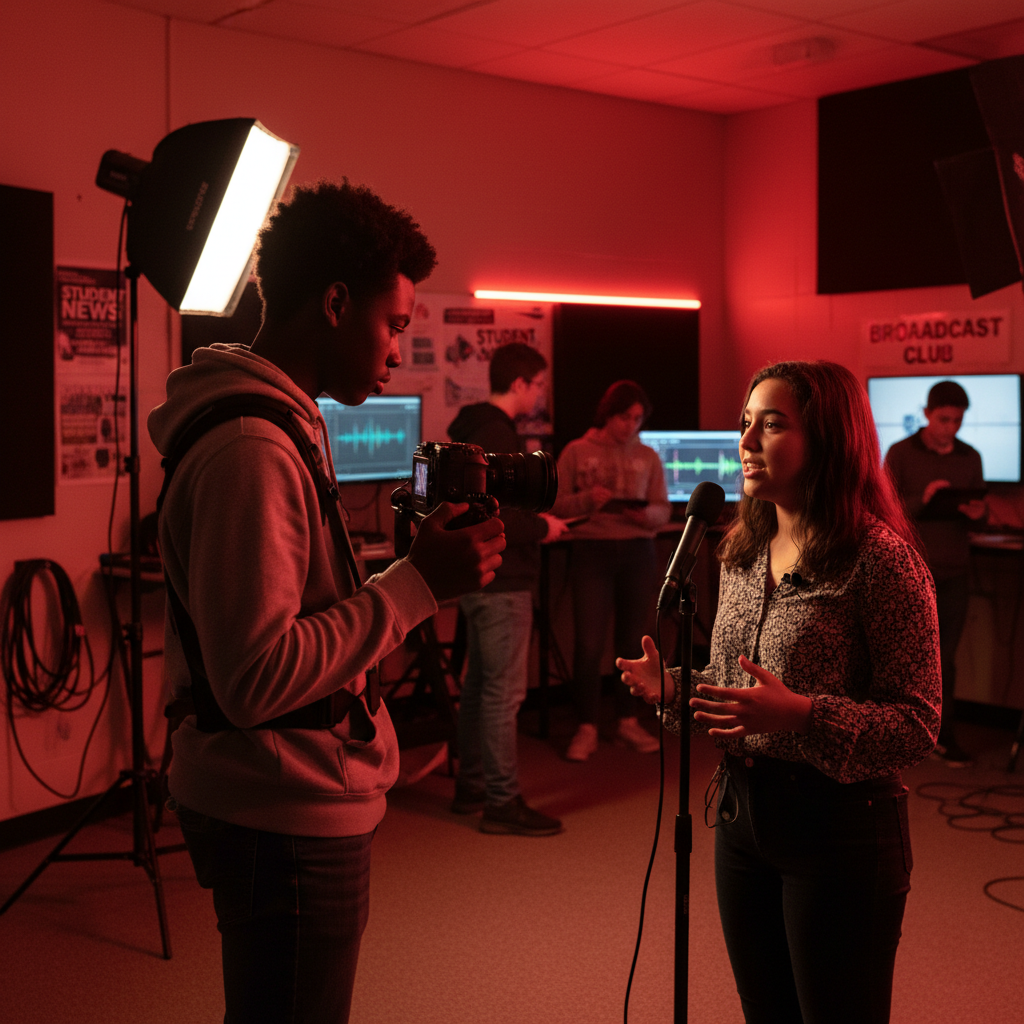
A school announcement, a youth program invitation, and a community event update may all need different voices, approvals, and timing. When the work moves through scattered drafts and personal folders, even a simple message can become difficult to finish. Onward Signal, also called Socially Onward, is school social media management and communications software designed to give teams a shared workspace for planning, creating, reviewing, and publishing communications.
Good communication is more than a full calendar. People need accurate details, a recognizable voice, and enough notice to take the next step. Onward Signal is intended for schools, programs, and community organizations that want to organize this work without treating every post as a campaign or every audience as identical. The aim is a clearer process for the people preparing the message and a more useful message for the people receiving it.
The cost of a message with no clear home
One person has the latest event time, another has the approved image, and a third is waiting to review the wording. These are ordinary coordination problems, especially when communications are only part of someone's job. They are not evidence that a team is careless. Without a shared process, though, a message can be delayed, repeated, or published before the right people have checked it.
School social media management needs to account for work before and after publication. A school communications calendar can show what is coming, but the team also needs room for drafts, revisions, approvals, and reflection on what was communicated. Onward Signal is designed to make those steps easier to see, so a change in plans does not require everyone to reconstruct the story from separate threads.
A workspace for communicators and the people they consult
A school communications lead may plan a week of updates, while a program coordinator supplies the details for an event. A reviewer may need to confirm wording or timing before anything goes out. A community organization may reuse approved assets while adapting a message for a specific audience. Onward Signal is designed with these different contributions in mind, rather than assuming one person creates and approves everything.
The people receiving a message matter just as much as the team producing it. Families and community members need the relevant information in language they can act on. A consistent visual identity can help them recognize the source, but it cannot make an unclear instruction clear. School social media management and communications software should support careful review of both the message and its purpose.
Plan, review, publish, and learn from the work
Onward Signal is designed to support school-branded templates and reusable assets, a media library, a content calendar, drafts and revisions, approvals, scheduling, and campaign workflows. It also addresses event promotion, publishing, and communications analytics. These capabilities are intended to keep the working materials and decisions around a message together, from an early idea through the team's review.
Templates can save time on repeat announcements while leaving room for the details that make a message useful. Approval steps can make responsibility clearer before publication. Analytics can prompt questions about whether a communication reached its intended audience, but numbers alone cannot tell a team what someone understood or needed. The human outcome sought is a more dependable path from important information to an understandable next step.
An illustrative week of communications
Consider a possible week, not a story about an actual customer. On Monday, a communications lead looks at the calendar and identifies a program event that needs promotion. The program team supplies the correct time, location, and contact details. A draft uses an appropriate template and an asset from the media library, while the lead checks whether the wording answers the questions a family is likely to ask.
On Tuesday, a reviewer suggests a revision before approval. Later, the team schedules the message if the relevant publishing connection is available and authorized. A change to the event on Thursday prompts an updated draft and another check of what has already been shared. At week's end, the team reviews available communications information and notes what to clarify next time. The process supports care; it does not guarantee attention or attendance.
Communications alongside the work being communicated
Onward Nexus is designed around community relationships, events, and follow-up. OnwardSync focuses on a school's internal planning and actions. Onward Playbook centers on youth program discovery and operations. Onward Signal addresses how teams prepare and share messages about relevant work. Looking at those different purposes can help an organization decide where a fact originates and who should confirm it before publication.
The products' related roles do not imply that a calendar item, event record, or program listing automatically flows between them. A communications team should verify details with the responsible people and confirm current product capabilities before planning a cross-product workflow. That discipline helps a message remain accurate, even when several teams contribute to the effort to move onward.
Authorization, responsible use, and current status
Communications may involve photos, contact details, drafts, and account access. Onward Signal is designed with privacy expectations in mind. Organizations should establish who may use an asset, who may approve a message, and what information belongs in a public post. They should review data agreements and their own policies before adopting the workspace. Connecting social accounts depends on each platform's authorization; access should not be assumed.
Onward Signal's site is published, and the product is in active development. Visit onwardsignal.com for current availability, including supported publishing and account-connection options. To begin, map one real announcement from request to review and publication. Identify where the approved details live, who gives the final go-ahead, and how changes are handled. Those questions are more useful than starting with a target number of posts.
Onward Signal questions, answered
What is Onward Signal?
Onward Signal, also called Socially Onward, is school social media management and communications software designed for planning content, managing assets and drafts, coordinating approvals, and supporting publishing workflows. Schools, programs, and community organizations can review its current capabilities at onwardsignal.com.
Does a content calendar publish posts by itself?
A calendar helps a team plan timing and responsibilities; publishing is a separate step. Onward Signal is designed to support scheduling and publishing workflows, but current availability should be confirmed on its product site. Social account connections depend on authorization from each platform.
Can more than one person review a message?
The product is designed to support drafts, revisions, and approvals so teams can establish a review process. Your organization should decide who supplies facts, who checks the message, and who authorizes publication, then verify that its intended workflow matches current product capabilities.
What should a team take from communications analytics?
Analytics can help a team ask whether its timing, channel, or message needs attention. They do not prove that a person read, understood, or acted on a post. Pair available measures with direct feedback and the context of what the communication was meant to accomplish.
How does Onward Signal relate to other Onward products?
Onward Nexus, OnwardSync, and Onward Playbook focus on different relationship, school operations, and program workflows. Onward Signal focuses on communicating about work. Their complementary purposes are not a promise of automatic integration; confirm current capabilities before depending on a shared workflow.