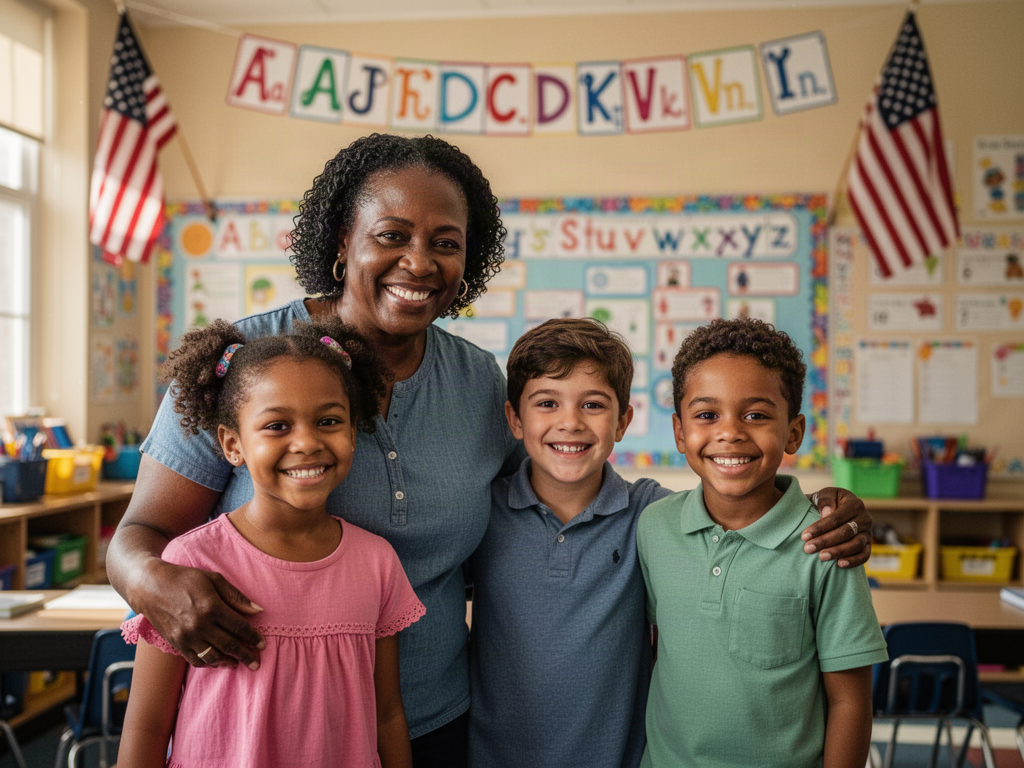
Finding the right school, after-school opportunity, summer program, or local support can take more work than any family should have to do alone. Information is scattered, priorities change, and a promising program may still be hard to contact. Onward Families is a published product site for a family navigation experience designed for parents and caregivers of Pre-K–8 children. It aims to bring discovery and planning into one place while respecting that families know their own needs.
A family school navigation platform should help a caregiver compare possibilities without choosing for them. Onward Families is designed to support school and program discovery, family plans that remember priorities, and handoffs to participating organizations. It also includes optional, opt-in research check-ins for adults. The product is in active development; readers should visit onwardfamilies.com for current availability rather than assuming that every described capability is already in use.
Families face a fragmented search
A caregiver looking for an after-school program may need to check several websites, ask about schedules, and find out whether transportation or other support is available. A search for a school or summer option can involve different questions again. These are ordinary, thoughtful questions, but the answers are often spread across organizations that do not share a common starting point. When a search stalls, the obstacle may be the system's complexity, not a family's commitment.
Onward Families is designed to make that search easier to organize. A family school navigation platform can bring schools, after-school opportunities, summer programs, and local support into a clearer discovery process. It should still leave room for a caregiver to ask a provider directly about details that matter to their child. A list alone is not enough; families need a way to remember what they learned, decide what to ask next, and move onward.
For caregivers and the organizations they meet
Parents and caregivers of Pre-K–8 children are the primary audience. One family may be choosing an early school experience; another may need a summer program that fits a changing work schedule. Caregivers bring knowledge of their child's interests, comfort, and daily needs that no directory can supply. Onward Families is designed to help them carry those priorities through a search rather than starting from a generic recommendation.
Schools, programs, and local support organizations are important to the other side of the conversation. A participating organization can answer its own questions about eligibility, timing, and what a family should expect. Handoffs are intended to make it easier for a family to take that next step with the right organization, not to suggest that every provider participates or that a place is guaranteed. The family's choice and the organization's own process still matter.
Discovery that remembers what matters
School and program discovery is designed to help caregivers find possibilities in one place. A family plan can hold the priorities that shape a decision, whether those are a child's interests, practical schedules, or questions to ask. When those priorities are remembered, the next conversation can start where the family left off. That is the practical value of a family school navigation platform: less repeated searching and a clearer path from an option to an inquiry.
Handoffs to participating organizations are designed to support the moment when a caregiver is ready to connect. The experience also allows optional, opt-in research check-ins for adults who choose to share their perspective. Those check-ins are not a condition of looking for support. Together, these features are intended to make navigation more responsive while keeping the human outcome modest and meaningful: a family knows what it wants to ask and whom to contact next.
A possible family journey
Consider a caregiver planning for the summer. At the start of the week, they explore available program information and record the priorities that matter to their household. They identify a few possibilities, then check which questions remain open: daily hours, the age group served, or how to contact a program. Rather than keeping separate notes across several searches, they return to their family plan when they have time to look again.
Later, the caregiver decides to reach out to a participating organization and follows the available handoff. That organization explains its own process, and the caregiver updates their plan based on what they learn. If invited to an optional research check-in, the adult can choose whether to participate. This is an illustration of the experience Onward Families is designed to support, not a customer account or a promise that any particular program or handoff is currently available.
How family navigation relates to the suite
ONWARDology is designed to support a child's K–8 growth, with age-aware goals, family guidance, and space for student voice. Onward Families addresses a different part of family life: finding schools, programs, and local support. The two ideas can sit beside one another without treating a child's growth record as a requirement for finding an opportunity. A caregiver should be able to consider each product according to the question they are trying to answer.
Onward Playbook is another part of the wider Onward Suite that families and partners may wish to explore for guidance. Ready Set Onward focuses instead on education and workforce navigation for learners 16 and older, including people whose path has been interrupted. Mentioning these products describes related purposes, not an automatic connection between accounts, providers, or personal information. Onward Families keeps its focus on helping caregivers find a workable next step for a younger child.
Privacy, development status, and next steps
Family priorities and information about children should be handled thoughtfully. Onward Families is designed with student privacy expectations in mind, and organizations should review data agreements before using it. Adults should understand what a handoff involves before sharing information with an organization. Research check-ins are optional and opt-in for adults; choosing not to take part should remain separate from a family's search for schools, programs, and support.
The Onward Families site is published at onwardfamilies.com, while the product remains in active development. Visit the site to check current availability and learn which parts of the experience are ready. A caregiver can start by writing down what matters most in the next school or program decision. An organization can start by considering how it explains its own process to families. Clear information and a respectful handoff make it easier to move onward.
Onward Families questions, answered
Who is Onward Families designed for?
It is designed for parents and caregivers of Pre-K–8 children looking for schools, after-school and summer programs, or local support.
Can a family apply to every program through the site?
Do not assume so. Handoffs are designed for participating organizations, which set and explain their own processes. Check the product site for current availability.
Are research check-ins required?
No. Research check-ins are optional and opt-in for adults; they are separate from a family's search for options.
How does this family school navigation platform differ from ONWARDology?
Onward Families is designed for finding schools, programs, and support. ONWARDology is designed around a child's K–8 learning and growth experience.
Is Onward Families live?
Its site is published, but the product is in active development. Visit onwardfamilies.com for current capabilities and availability.